Extended Reality Audio-Visual Instruments: Design Framework and Case Study
Esther Gruy; Florent Berthaut
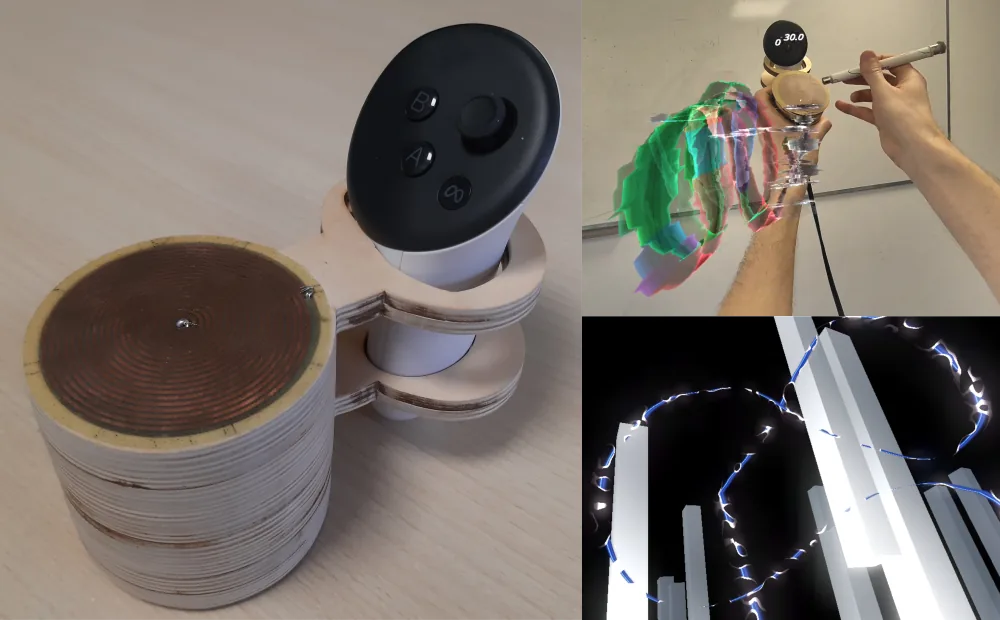
- poster
- Paper PDF link
- Presence: in person
- Type: long
- Session: Poster Session 2
Abstract:
Scientists, artists and performers have explored the relationship between visuals and sound on numerous occasions, to try and find/define ways to fuse both sensory experiences together. Immersive technologies further amplify the possibilities for multimodal expression in performance contexts. While previous frameworks exist for the design of immersive musical instruments and audio-visual instruments independently, we believe that their combination raises specific concerns, which might prevent the exploration of expressive opportunities. In this article, we define the concept of Extended Reality Audio-Visual Instruments (XRAVI) and propose a framework for their analysis and design, based on the literature on audio-visual and extended reality instruments. We evaluate it through a collaborative autoethnographic work, where an initial shared instrument has been developed and practised following two different approaches: audio-first and visual-first. From it, we derive insights and guidelines for the design of XRAVI.