Effects of Rhythmic Stimulation of Different Sensors on Rhythm Stability and Cognitive Load
Li Yu; Chien-Hsiung Chen
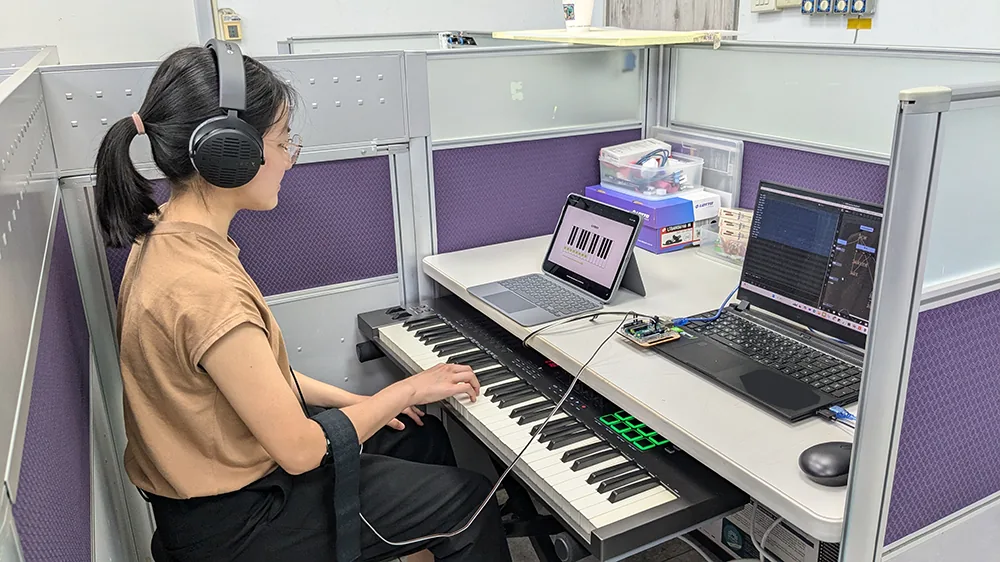
- poster
- Paper PDF link
- Presence: in person
- Type: medium
- Session: Poster Session 2
Abstract:
Both auditory and tactile metronomes have been found to increase cognitive load in instrument learners, which can negatively affect their musical expression and rhythm stability. Although multisensory integration has the potential to enhance user performance and subsequently reduce cognitive load, previous research has often overlooked the complex cognitive processes involved in playing an instrument. This pilot study tested how auditory, tactile, and combined metronomes affect users’ cognitive load and rhythm stability. The results are as follows: (1) the combined metronome significantly improved rhythm stability during instrument playing, and (2) it is still unknown which metronome requires the least cognitive load because the task itself did not engage sufficient cognitive resources. This study suggests that the multisensory metronome can improve rhythm stability, enhancing the efficiency of practice and the musical performance of amateur musicians.