Techniques for Closely-Coupled Sensing and Actuation in Digital Musical Instruments
Matthew Davison; Adam Schmidt; Andrew McPherson
- oral
- Paper PDF link
- Presence: in person
- Duration: 16
- Type: long
- Session: Sensing and Actuating
Abstract:
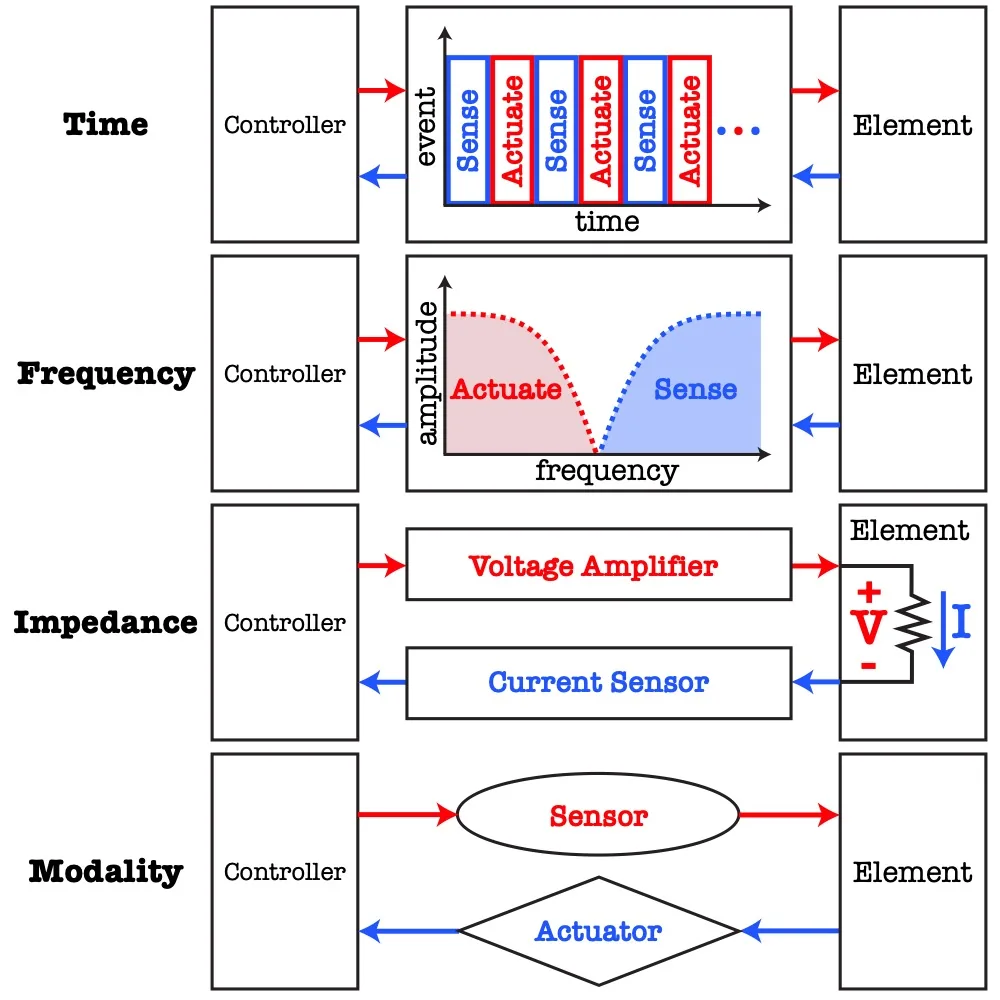
Musical instruments involve numerous bidirectional couplings, between the musician and instrument in the tactile domain and between elements of the instrument’s mechanical system. Closely-coupled sensing and actuating – where the two are simultaneous, collocated, in the same modality, and frequency range – can enable the design of hybrid instruments that fluidly exist across physical and digital domains. This, however, can introduce issues of crosstalk between actuation and sensing as well as unstable feedback if the implementation is not carefully considered. This paper summarises techniques for achieving closely-coupled sensing and actuation in digital musical instrument design. Options for reducing and mitigating interference between sensing and actuating are discussed, with their potential affordances of particular applications within hybrid instruments explored.