The no-input pedalboard: practice, theory and reflection on the development of a new network-instrument
Danny Bright; Lee Westwood
- poster
- Paper PDF link
- Presence: in person
- Type: long
- Session: Poster Session 2
Abstract:
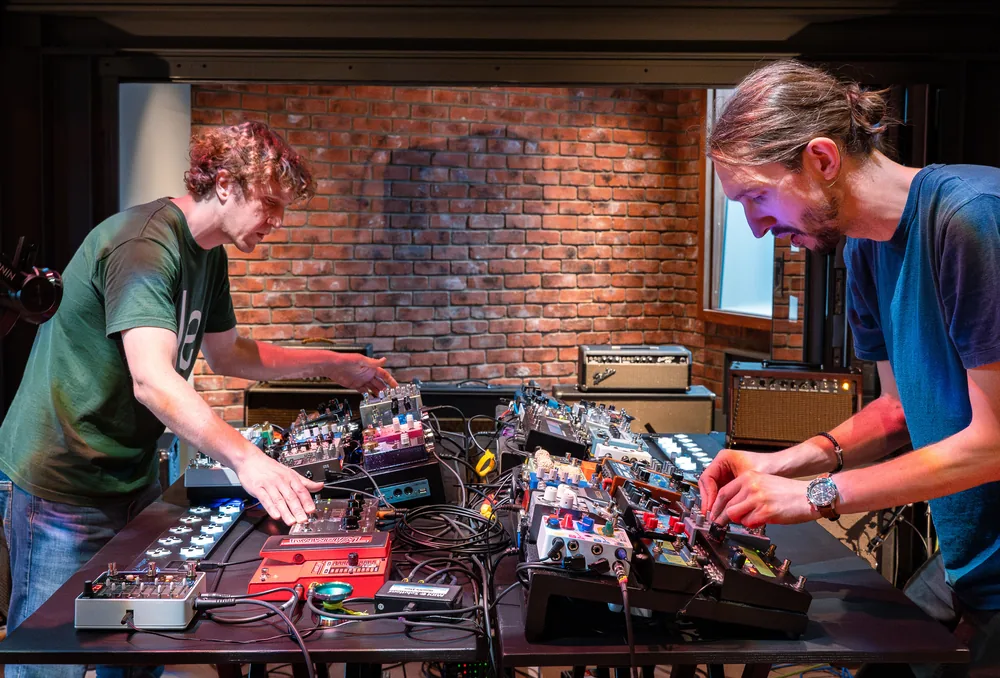
This paper explores the innovative performance interfaces of Noise Peddler, a no-input pedalboard duo whose live and studio work demonstrates how the repurposing of the effects pedal can lead to its organological reconfiguration from ‘tool’ to ‘instrument’. Through a discussion of the inherent paradox in pedal design (controlled by the hands but placed at the feet), this paper identifies a latent potential that is unlocked when the pedalboard is approached as the primary sound source and performance interface. Lahdeoja’s (2010) theory of the network-instrument is used as a framework to understand how bringing multiple pedals - and pedalboards - together as an independent “network of sound production and processing units, spatially extended and configurable by the player according to the desired sonic results”, creates a unique interface for musical expression. This model, alongside thoughts from a range of pedal manufacturers on the intended applications of their guitar pedals, provides the foundation for a practical and theoretical reconsideration of the possibilities for interaction with effects pedals. Noise Peddler exemplify these possibilities in a practice-led review of the instrument, which explores the role of reconfiguration, mapping and novel performance gestures, straddling the boundary between academic research and the practicing artistic community.