Histories of the Schmitt Trigger in Handmade Electronic Instruments for Making Sound in the Arts: A Literature Review
Pia van Gelder
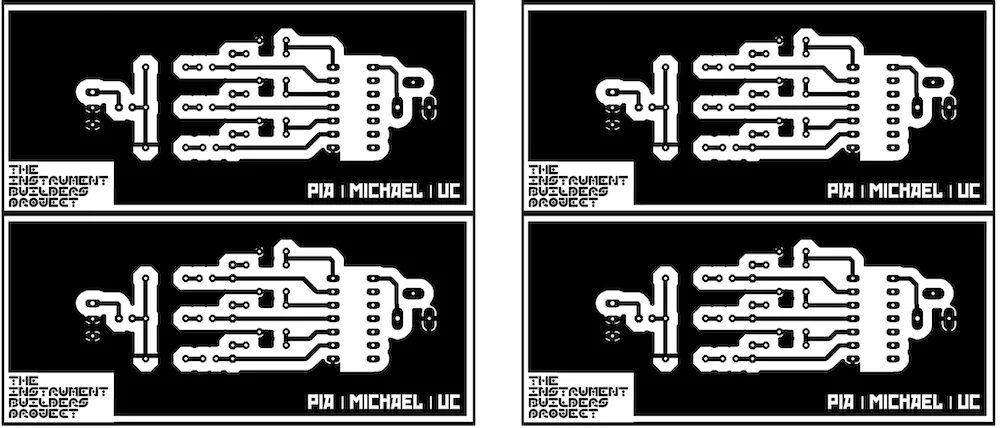
- poster
- Paper PDF link
- Presence: in person
- Type: medium
- Session: Poster Session 1
Abstract:
The Schmitt Trigger was invented by biophysicist Otto Herbert Schmitt in the 1930s as a ‘simple hard valve circuit’ that ‘provides off-on control with any desired differential from 0.1 V to 20 V’ (Schmitt, 1938). Schmitt was a graduate student at the time, stationed at a Marine Biological Laboratory working with large nerve axions of squid. Since its invention, applications of the Schmitt Trigger have proliferated, appearing in a variety of common technologies, popularly utilised for signal conditioning and to execute relaxation oscillators.
The Schmitt Trigger is also a popular integrated circuit used in introducing people to building their own electronic synthesisers. This is evidenced in Nicolas Collins’ ‘Handmade Electronic Music: The Art of Hardware Hacking’ first published in 2002, officially in 2006, with projects from My First Oscillator to various noise makers, all utilising the Schmitt Trigger. This paper presents findings from a literature review investigating histories of applications of the Schmitt Trigger in the making of instruments for sound art and music practices. Preceding Collins, resources include handbooks for practitioners that reveal the circuit’s cultural impacts and associated historical communities, while contemporary discourse in experimental practice have emerging thematics, some of which present curious parallels with Otto Schmitt’s own research interests.