Zen-PCB: Material Honesty and Structural Metaphor in a Naked PCB Granular Looper Instrument
Ryoma Okuda; Julián Villegas
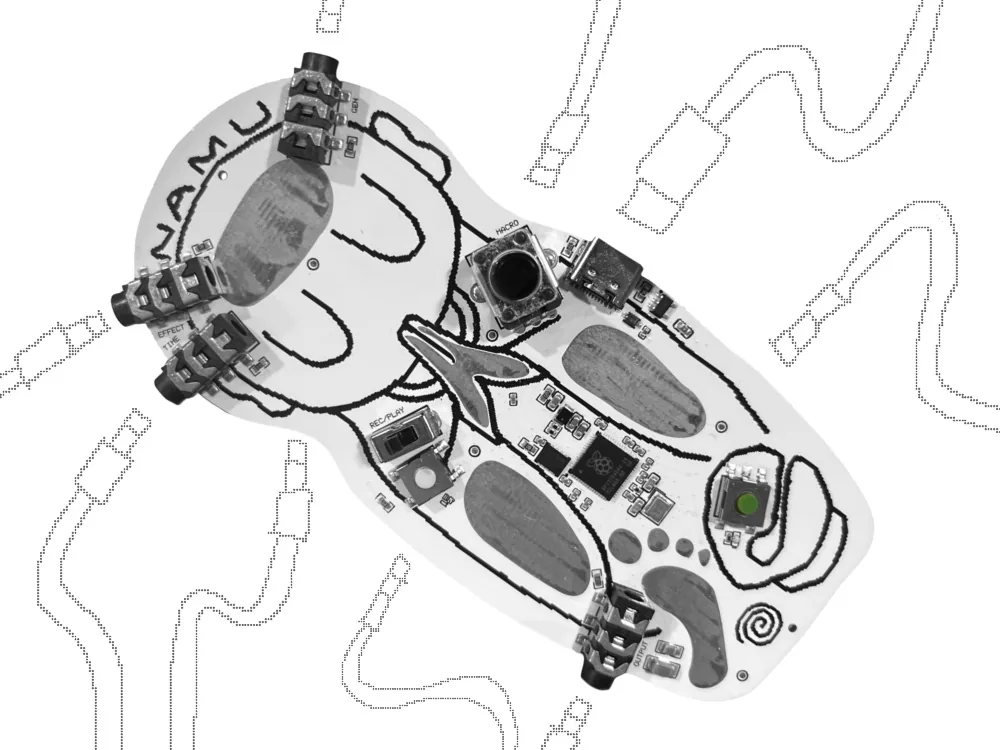
- demo -->
- Paper PDF link
- Presence: in person
- Type: short
Abstract:
Zen-PCB is a musical instrument conceived as a counterpoint to the over-rationalized world and the passivity fostered by automated systems. It draws inspiration from ancient Japanese religious symbolism, the “kawaii” aesthetic, and the principle of material honesty: utilizing the naked printed circuit board as the instrument’s visual and tactile skin. Zen-PCB aims to reintroduce “ambiguity” and “spirituality,” qualities often absent in today’s functionalist designs.
Zen-PCB encourages human initiative and celebrates the act of embracing “aimlessness.” It employs low-latency granular synthesis and destructive overdubbing. Zen-PCB features “matrix patching,” allowing users to interact with the PCB’s traces using conductive styluses. This interaction requires active participation, pushing back against the reliance on automated tools and sparking a creative tension between human and machine.
Through structural metaphors, we reframe standard sampler functions as spiritual exercises. By incorporating the Buddhist concept of “impermanence” into its DSP architecture, Zen-PCB encourages users to engage with a continuous cycle of sonic creation and destruction. This pursuit of non-utilitarian experience offers a fresh perspective on creativity. We report on the design, implementation, and the reception of Zen-PCB, discussing how it transcends its function as a simple instrument, becoming a tool for physically embodying the cyclical nature of existence.