RiTA Is Not An Instrument
Stephen D. Wolff, Brighton & Hove Music for Connection / Max Gate Digital Ltd
- Lighting Talk
- Paper PDF link
- Duration: 10
- Session: Paper Session 6 - alt.nime
Abstract:
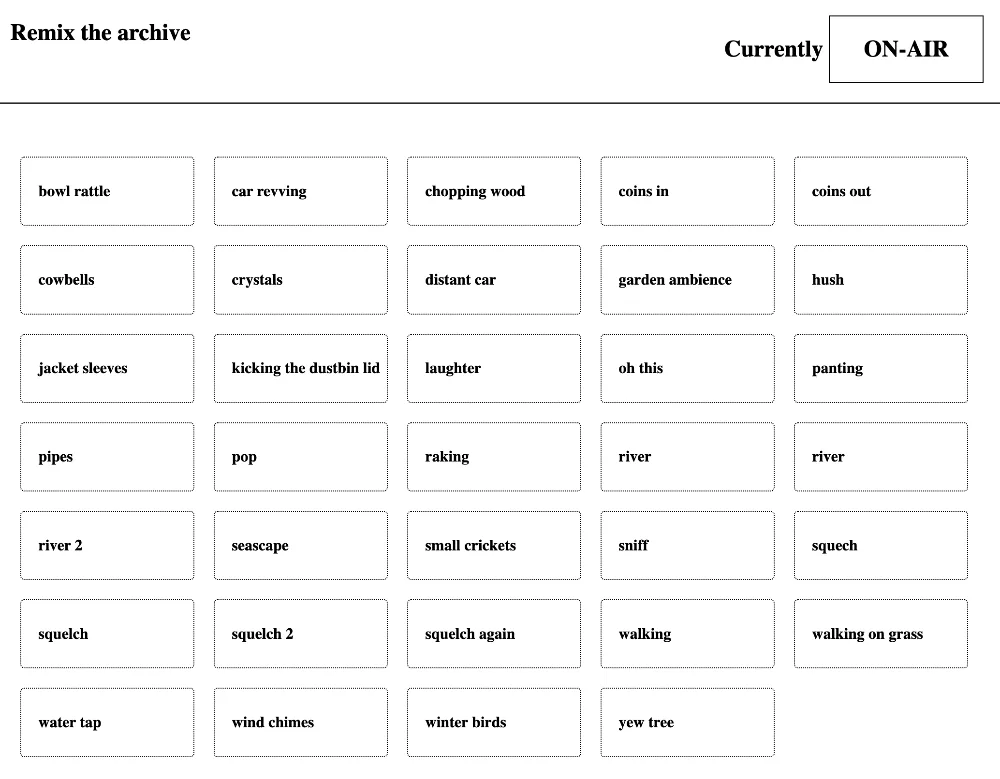
“The default assumption in Western musical culture is that an instrument is an object that a player uses to make music: one person, one instrument, one set of expressive possibilities. This paper questions this from the perspective of a practitioner working outside academia. Drawing on five years of practice with RiTA, a browser-based shared soundboard built for Brighton & Hove Music for Connection (BHMC), I describe something that was not designed as an instrument, but was recognised as one by the community’s workshop facilitators. RiTA has no single player, no clear boundary, and no existence independent of the community it serves. It was built to help learning disabled musicians, older people, and refugees make music together during a pandemic, and it has since travelled to contexts including the British Library’s Unlocking Our Sound Heritage programme and the National Trust’s Changing Chalk project. Using RiTA as a case study, we argue that instruments are better understood as entanglements of people, sounds, spaces, and organisational structures than as objects. Applying Conway’s Law, I suggest that different organisational structures naturally produce different kinds of instrument, and that widening the conversation about what instruments can be may require welcoming the organisations that produce them.”