The Gift of Chaos: Rob Hordijk's Open Design Philosophy and the Formation of Post-Digital Instrument Communities
Pere Amengual-Gomila; Alfredo Sanz-Hervás
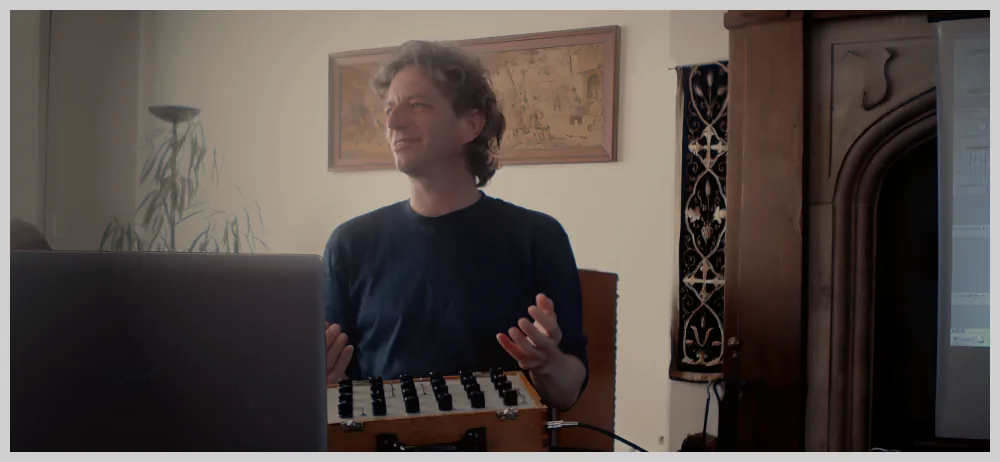
- poster
- Paper PDF link
- Presence: in person
- Type: medium
- Session: Poster Session 2
Abstract:
This paper explores the legacy of electronic instrument designer Rob Hordijk (1958–2022) as a valid and meaningful alternative to proprietary paradigms in music technology. While certain designs like the Benjolin were explicitly offered as a “gift to the community”, Hordijk’s broader practice, rooted in the “Dutch West Coast” school of synthesis, relied on a nuanced intellectual property model based on personal prestige and the concept of “prior art”. This research investigates a central question: How does a deliberate reliance on community-validated authorship and hand-made quality facilitate the formation of resilient, non-hierarchical communities of practice?
Drawing on primary sources and personal communications, the study traces the formation of Hordijk’s community through two pivotal axes: the EEME 2007 in Belgium and the EEME 2012 in Mallorca. By examining the Blippulator (designed by Biyi Amez, Hordijk’s designated successor) as a tool for “ethical reverse engineering”, this paper argues that Hordijk’s designs act as social catalysts. In alignment with the NIME 2026 theme of “Communities”, this research shows how trust-based design models foster resilient artistic ecosystems that challenge industrial hegemony through a collective “custodianship of knowledge”.