Peripersonal Modular Interfaces for Care Ecologies: Decoupling Sensing and Surface in Accessible Digital Musical Instruments
Wing Hei Cheryl Hui; Patrick Hartono
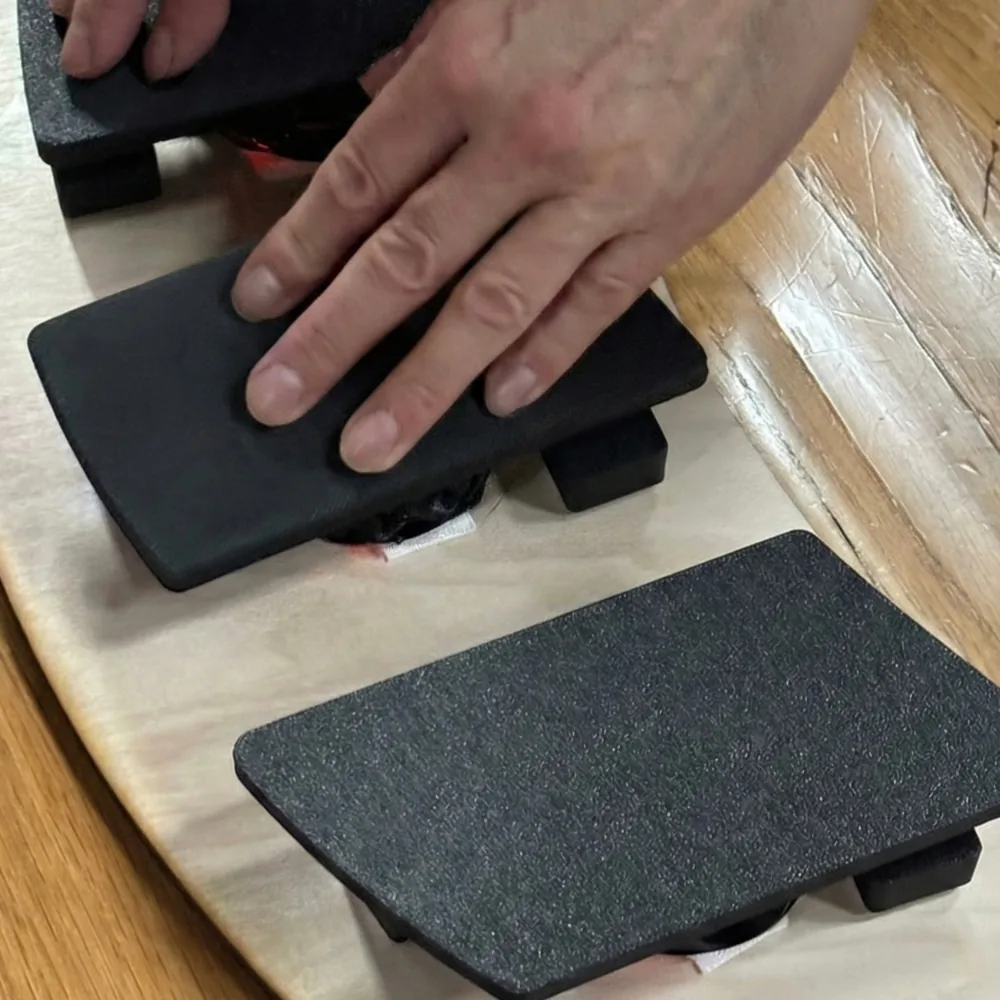
- poster
- Paper PDF link
- Presence: in person
- Type: long
- Session: Poster Session 3
Abstract:
Accessible Digital Musical Instruments (ADMIs) are often assessed for individual access, yet community workshops depend on facilitation labour, hygiene, rapid setup, and shared authorship. We report a collaboration with a London-based community music charity to co-design a Peripersonal Modular Interface that supports ensemble music-making across diverse motor profiles. The system comprises wireless sensing tiles with TPU lattice structures, mechanically decoupling non-contact Hall-effect sensing from the deformable surface so compliance can be tuned without compromising robustness or cleaning. Treating each tile as an independent network node enables participants and facilitators to reconfigure the instrument across tabletops, wheelchair trays, or floors and to negotiate “where the instrument is” in situ within a care ecology. We present findings from a co-design study (N=12) spanning musicians, facilitators, support workers, and volunteers, alongside end-to-end latency benchmarking of a private haptic–audio loop. Results show ~7 ms average latency (max <12ms) and reports of immediate sonic response, cable-free safety, and maintainability via replaceable tactile layers, exemplifying structural agency beyond screen-based administration.